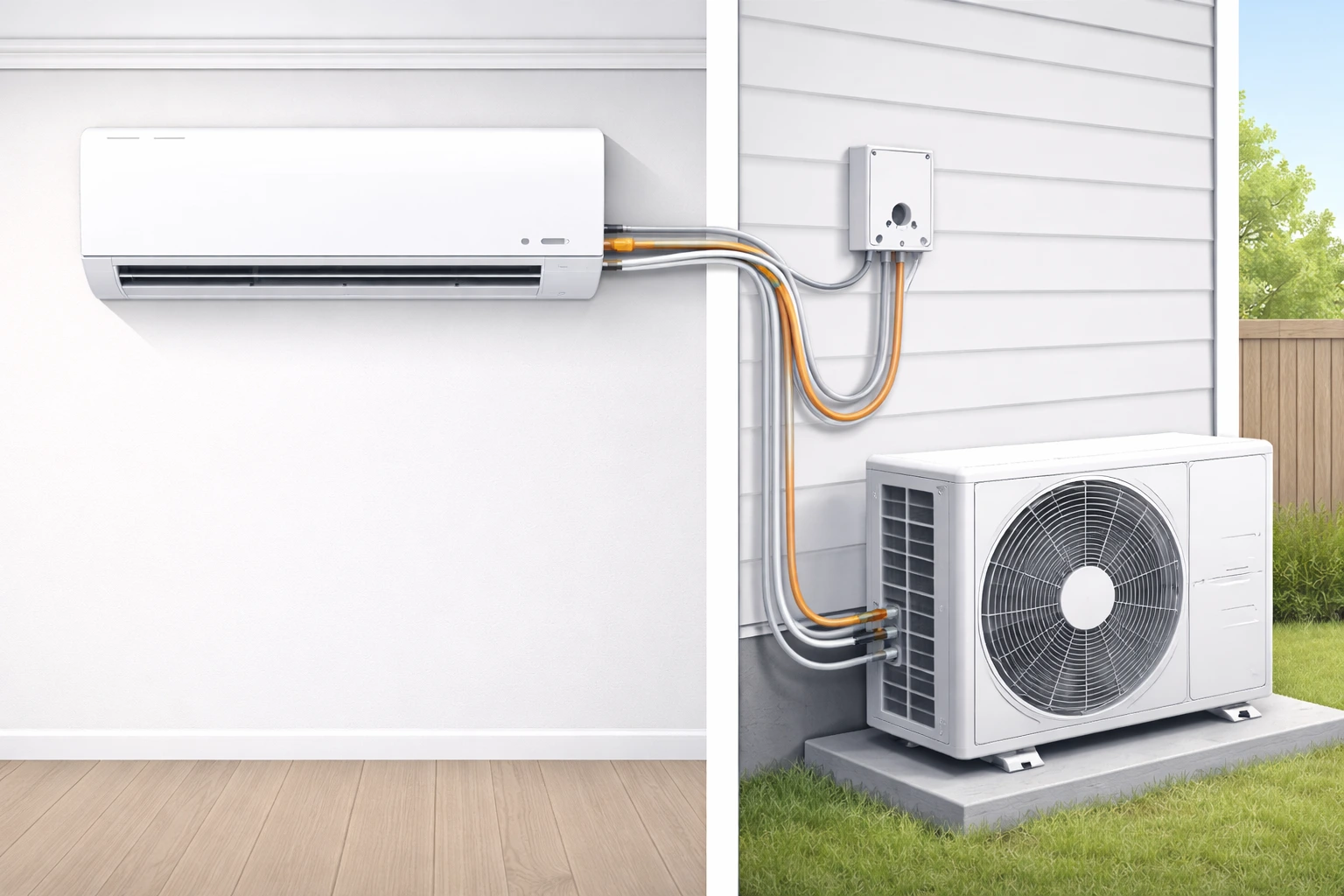
Many homeowners consider installing a mini split themselves to save money. Online videos make it look simple, and some systems are marketed as DIY-friendly.
The reality is more nuanced.
This guide explains what DIY mini-split installation actually involves, which parts are realistic for homeowners, and when hiring a professional is the smarter move.
What “DIY Mini Split Installation” Really Means
DIY does not always mean doing everything yourself.
For many homeowners, DIY installation means handling some steps while leaving others to licensed professionals. Understanding this distinction prevents costly mistakes and helps keep the total project cost under control.
Parts of Installation Homeowners Often Handle
Some installation steps are commonly handled by capable homeowners:
- Mounting indoor air handlers
- Installing wall brackets or pads for the outdoor unit
- Drilling wall penetrations for line sets
- Running refrigerant line covers
These tasks require careful measurement and planning, but they are generally manageable with the right tools and a properly sized system.
Choosing the correct capacity beforehand — covered in the mini split size guide — helps avoid placement and performance issues later.
Steps That Often Require Professional Help
Other steps are more technical and carry a higher risk:
- Electrical wiring and circuit installation
- Vacuuming refrigerant lines
- Charging or handling refrigerant
- Final system testing and commissioning
Mistakes at this stage can damage equipment, void warranties, or create safety hazards. This is one reason DIY approaches are less practical for larger or more complex systems.
Tools and Equipment People Underestimate
DIY installation requires more than basic household tools.
- Torque wrenches for flare fittings
- Vacuum pumps and gauges
- Electrical testing equipment
- Proper mounting hardware
Buying or renting these tools can reduce savings if not planned carefully, which is why DIY does not always result in the lowest overall cost.
Warranty and Code Considerations
Many manufacturers require professional installation for full warranty coverage.
Local building codes may also require permits or inspections, especially for electrical work. Skipping these steps can create issues during resale or insurance claims.
Common DIY Mistakes That Cost More Later
The most common problems homeowners run into include:
- Improper line set flaring leading to refrigerant leaks
- Incorrect unit placement is affecting airflow
- Inadequate electrical capacity
- Skipping vacuum procedures
These issues often require professional repair, eliminating any initial savings and sometimes costing more than a proper install from the start.
When DIY Makes Sense
DIY installation can make sense when:
- The system is truly designed for DIY use
- The homeowner is comfortable with technical work
- Electrical capacity is already available
- Professional help is used where required
When Professional Installation Is the Better Choice
Professional installation is often the better option for:
- Multi-zone systems
- Whole-home installations
- Homes needing electrical upgrades
- Situations where warranty protection matters
In these cases, comparing mini splits with central air systems can also help determine whether a different HVAC approach makes more sense.
Bottom Line on DIY Mini Split Installation
DIY mini split installation can reduce costs, but only when approached realistically.
Knowing which steps you can handle — and which you should not — protects your investment and prevents frustration.
If you are still deciding whether a mini split is the right solution overall, start by assessing whether it fits your home and goals before choosing an installation path.