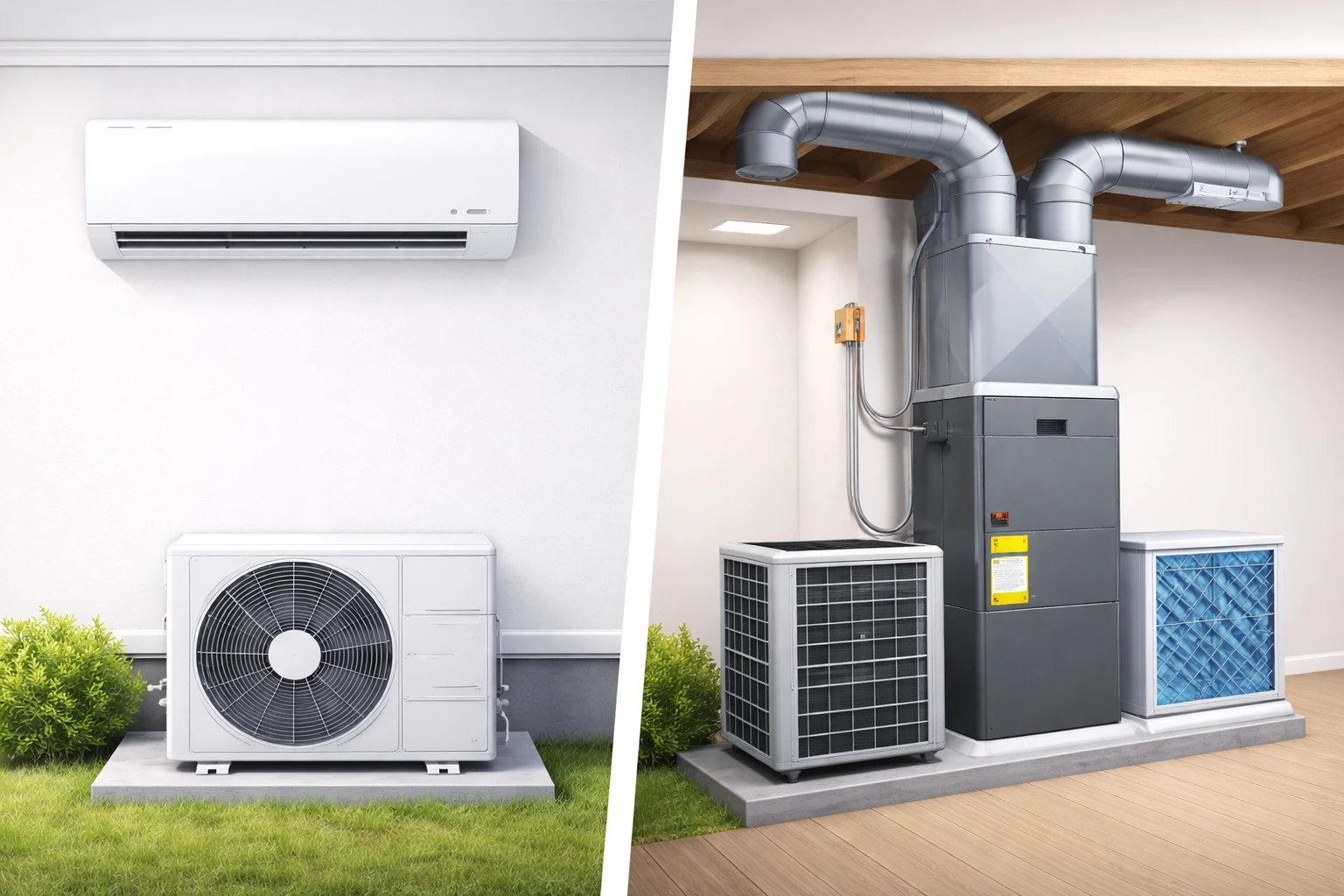
If you are deciding between a mini split system and central air, you are not alone. This is one of the most common heating and cooling decisions homeowners face.
Both systems can heat and cool a home effectively, but they solve comfort challenges in very different ways. This guide compares mini splits and central air honestly — across cost, installation, efficiency, and long-term ownership — so you can choose what fits your home and expectations.
Upfront Equipment and Installation Cost
Initial cost is often the first comparison point.
Mini splits typically cost less upfront when used to condition one or two specific spaces. As additional indoor units are added, especially in multi-zone systems, total system cost increases.
Central air systems often require a higher initial investment, particularly when ductwork must be installed, replaced, or redesigned. However, in homes with existing duct systems in good condition, replacement costs may be more predictable.
For a detailed breakdown of equipment, labor, and electrical factors, review our mini split cost breakdown.
Installation Complexity and Structural Impact
Mini splits avoid ductwork, which often makes installation less invasive. Refrigerant line routing and wall penetrations are required, but large structural changes are usually unnecessary.
Central air installation depends heavily on duct condition. Older or poorly designed duct systems may require extensive modification to deliver consistent airflow.
Installation approach also influences cost and risk. Some homeowners evaluate DIY mini split installation considerations, while central air systems almost always require full professional installation.
Comfort Control and Temperature Flexibility
Mini splits provide zone-based control. Each indoor unit conditions its assigned space independently, allowing different temperatures in different rooms.
Central air systems condition the home as a whole. Zoning systems can be added, but they increase complexity and cost.
Homes with uneven temperatures or additions often benefit from targeted conditioning, especially when the system is properly sized for each space.
Energy Efficiency and Operating Cost Differences
Mini splits are generally highly efficient, particularly when used to heat or cool specific rooms rather than an entire home. Eliminating duct losses can reduce wasted energy.
Central air systems can also operate efficiently, but whole-home conditioning and duct leakage may increase energy consumption.
Actual monthly expense depends on climate, insulation, runtime, and local utility rates. For a deeper look at how these factors influence electricity usage, see our mini split operating cost guide.
Aesthetics and Space Considerations
Mini split indoor units are visible and typically mounted on walls or ceilings. While many homeowners accept this tradeoff for zoned control, others prefer concealed equipment.
Central air systems distribute conditioned air through hidden ductwork and vents, keeping primary equipment out of sight.
Maintenance Requirements and Long-Term Ownership
Mini splits require regular filter cleaning and periodic professional servicing. Multi-zone systems increase the number of indoor components that require attention.
Central air systems require duct maintenance, filter replacement, and routine servicing of the outdoor unit and air handler.
Long-term reliability depends more on correct sizing and proper installation than on system type alone.
When a Mini Split Makes More Sense
A mini split may be the better option if you want targeted comfort, minimal structural disruption, or a solution for specific rooms such as additions, garages, or converted spaces.
When Central Air May Be the Better Fit
Central air may be more appropriate in homes with well-designed ductwork where consistent whole-home conditioning is the primary goal.
If you are still evaluating whether a mini split fits your home layout at all, begin with whether a mini split is right for your home before comparing system types.
Bottom Line: Comparing Total Cost and Long-Term Value
Mini splits and central air systems both have strengths and limitations. The best decision comes from understanding total cost — equipment, installation, maintenance, and operating expense — alongside your comfort goals.
Clear analysis now prevents long-term regret.